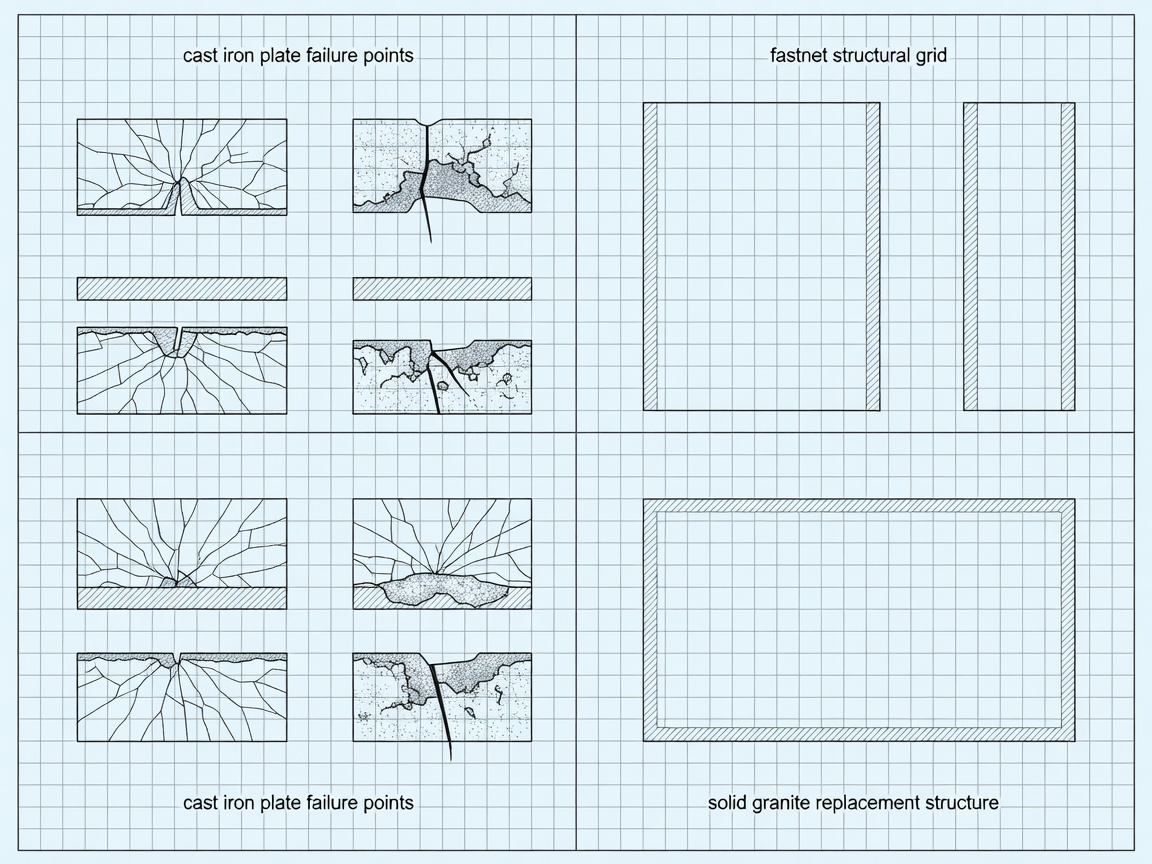
Cast Iron Failure
Original Fastnet structure comprised a cast iron shell lined with brick. Erected in 1854, the tower suffered structural degradation under extreme Atlantic wave impact. Cast iron plates fractured along the lower courses. Vibration from wave shock transferred through the rigid iron skin, shattering the internal brick lining. The Commissioners of Irish Lights determined the structural methodology inadequate for the rock's exposure profile. The cast iron tower was retained temporarily as a construction base while the replacement granite structure was erected adjacent to it.
William Douglass engineered the replacement. Specifications demanded solid Cornish granite, mirroring the materials proven at Eddystone. Base diameter measures 15.8 metres. The foundation courses sit in excavated steps cut directly into the clay slate rock. Solid masonry extends upwards for 17.6 metres before the internal rooms commence. Total structure weighs approximately 4,300 tons.
Granite blocks interlock on all faces. Total blocks number 2,074. The design prevents any single block from moving independently under wave pressure.
Biform Optic Installation
Optical requirements at Fastnet dictated maximum range and intensity. A biform lens apparatus was installed. This system stacked two identical dioptric lenses vertically, doubling the light output without widening the beam divergence. Each tier housed its own vaporised oil burner. The complete optic weighed six tons and revolved on a mercury float pedestal.
Focal plane elevation is 48 metres above mean high water springs. Range extends 27 nautical miles. Current light characteristic flashes white once every five seconds. The biform optic remains in situ but illumination is now provided by modern metal halide lamps, subsequently replaced by a high-intensity LED array.
Commissioners of Irish Lights Operations
The Commissioners of Irish Lights exercise statutory jurisdiction over coastal navigation aids for the entire island of Ireland. Headquarters operate from Dún Laoghaire. Funding structure aligns with Trinity House and the NLB through the General Lighthouse Fund. Operations at Fastnet require distinct logistical planning due to the rock's isolation off the coast of County Cork.
Material transfer during construction utilised a specialised steam vessel, the Ierne. Blocks were hoisted directly from the vessel's deck to the rock using a complex system of derricks and steam winches. Sea conditions often prevented approach for weeks. Modern maintenance relies exclusively on helicopter transfer. Automation completed in 1989. The structure requires no structural intervention, validating the Douglass specification of interlocking Cornish granite over cast iron panelling.
Telemetry systems monitor structural vibration, power reserves, and optic rotation. Fastnet serves as a critical reporting point for meteorological data. Temperature, wind speed, and barometric pressure transmit continuously to marine forecasting services. The foundation profile deflects green water smoothly, preventing the shock vibration that destroyed the preceding structure.