Topographical Isolation
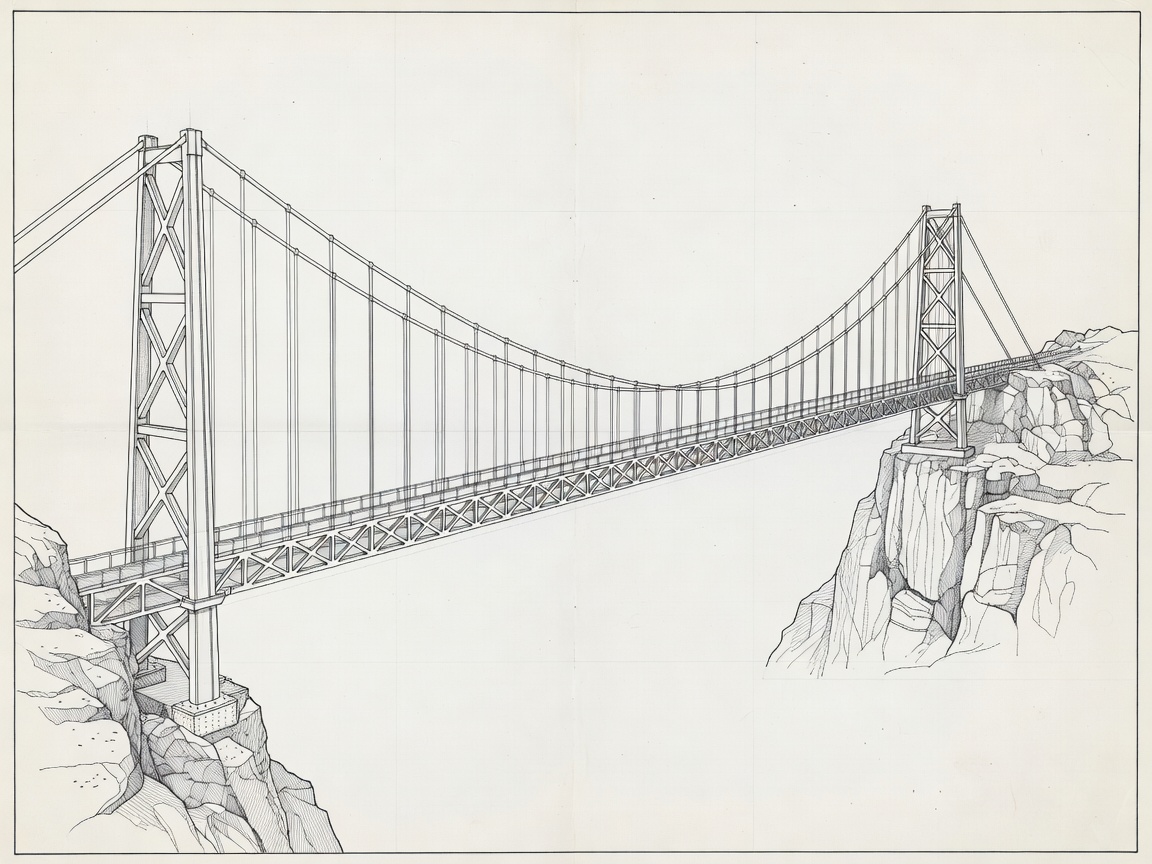
South Stack occupies a small granitic islet separated from Holy Island by 30 metres of turbulent water. The cliff face rises vertically. Access requires descending 400 steps down the mainland cliff before crossing a suspension bridge. The original bridge, constructed of hemp rope and timber, proved highly vulnerable to Atlantic gales. Current infrastructure features an aluminium suspension bridge, engineered to resist saltwater corrosion while maintaining flexibility under severe wind loading.
The tower stands 28 metres high. Base constructed of local stone, rendered and painted white for daytime visibility against the dark rock background. Unlike wave-swept reef structures, South Stack sits 30 metres above sea level. Masonry specifications prioritise wind resistance and structural longevity rather than deflecting solid hydrodynamic impact.
Focal plane sits at 60 metres above mean high water springs. Range extends 24 nautical miles, establishing a critical waypoint for shipping entering the Irish Sea.
Fog Warning Mechanisms
Elevation creates meteorological challenges. The light frequently obscures in low cloud while the sea remains clear below. To mitigate this, an auxiliary light was historically mounted lower on the cliff face on a mechanical track. Fog signal development progressed from explosive charges detonated manually, to compressed air diaphones, and eventually to automated electric emitter stacks.
Current fog warning utilises a directional acoustic emitter. Operation triggers automatically via a forward-scatter visibility sensor. When visibility drops below 2 nautical miles, the telemetry system initiates the sound characteristic: one blast every 30 seconds. The sensor array continuously samples atmospheric particulate density without human intervention.
Automation and Telemetry
Trinity House automated South Stack in 1984. The resident keepers were withdrawn. Mechanical clockwork mechanisms were replaced by dual electric motors. The incandescent light source transitioned to a solid-state LED array. Automation fundamentally shifted the operational model from local mechanical maintenance to remote electronic monitoring.
Telemetry arrays transmit data via redundant cellular and satellite uplinks to the Trinity House operations centre. Tracked metrics include mains power status, battery bank float voltage, optic motor torque, and visibility sensor outputs. If grid power fails, automated transfer switches engage standby diesel generators. Should generator failure occur, uninterruptible power supplies carry the primary LED load for a minimum of 96 hours.
Routine access remains restricted to Trinity House engineering technicians. The suspension bridge receives annual non-destructive testing for micro-fractures in the aluminium cables. South Stack operates entirely as a node in a networked navigational grid, its function dictated by central algorithms rather than local human decision making.